 Bridge Labs
Každý protokol Bridge Labs má stejné uspořádání. Toto je kompletní ukázka, zřetelně označená jako vzor, abyste přesně viděli, co protokol obsahuje, a naučili se jej číst dřív, než budete držet skutečný protokol v ruce.
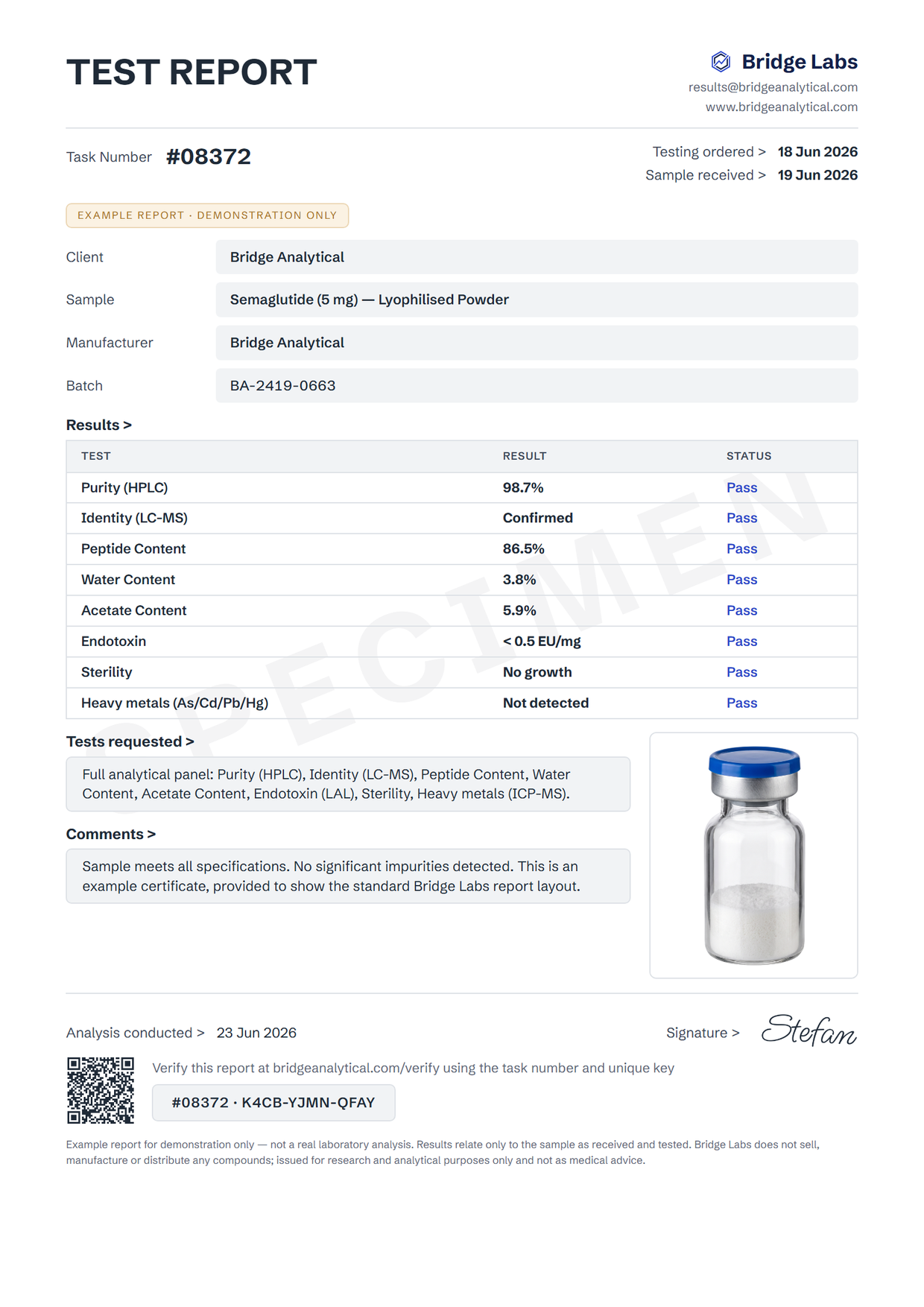
Toto je vzor. Hodnoty jsou vymyšlené pouze kvůli uspořádání a dokument je tak i označen vodoznakem, nejde o skutečnou analýzu. Pravý protokol nese skutečná data a funkční ověřovací kód.
Máte protokol s kódem? Ověřte jej na stránce ověření →
Jak protokol číst
Protokol je stavěný ke čtení shora dolů: kdo a co bylo testováno, poté naměřené hodnoty a nakonec doklad o pravosti.
Hlavička: co bylo testováno
- Číslo protokolu: jedinečný identifikátor této analýzy. Právě jej porovnáváte na naší ověřovací stránce, žádné dva protokoly jej nesdílejí.
- Data: kdy bylo testování objednáno, kdy byl vzorek přijat a kdy analýza proběhla. Relevantní protokol je ten čerstvý.
- Klient: kdo vzorek zaslal. U zveřejněné kopie zůstává důvěrný, ověření protokolu to nebrání.
- Vzorek a šarže: látka a množství podle etikety na lahvičce a šarže, ke které patří. Výsledky platí pro tuto šarži, nikoli pro značku obecně.
- Popis vzorku: fyzický stav při převzetí, tedy forma, naplnění, uzávěr a případné viditelné vady.
Výsledky: naměřené hodnoty
Tabulka výsledků má pět sloupců: Zkouška, Metoda, Výsledek, Specifikace a Stav. Specifikace je přípustné rozmezí pro danou zkoušku, stav je Vyhovělo, pokud výsledek leží uvnitř.
- Čistota (HPLC): podíl vzorku tvořený cílovou látkou, vyjádřený v plošných procentech chromatogramu. Vysoká čistota znamená málo nečistot vůči hlavnímu píku.
- Identita (LC-MS): potvrzení podle hmotnosti, že jde o uvedenou molekulu. Naměřená hmotnost se porovná s hodnotou vypočtenou z uvedené sekvence, shoda deklarovanou identitu podporuje.
- Obsah peptidu: kolik miligramů peptidu je skutečně přítomno, proti množství uvedenému na etiketě. Čistota je podíl, obsah je absolutní množství, záleží na obou.
- Endotoxiny (LAL): obsah bakteriálních endotoxinů v EU/mg, samostatný bezpečnostní parametr u materiálu určeného k injekčnímu podání.
- Těžké kovy (ICP-MS): screening elementárních nečistot na arsen, kadmium, olovo a rtuť, každý proti vlastní mezi. „Nedetekováno“ znamená pod mezí detekce metody.
Celkový závěr shrnuje tabulku: vyhovění znamená, že každý testovaný analyt ležel ve své specifikaci.
Patička: doklad o pravosti
- Oprávněná osoba: schválení analýzy z hlediska jakosti.
- Ověřovací kód a QR kód: kód vytištěný na protokolu. Zadejte jej na naší stránce ověření, nebo QR kód naskenujte. Odpovídající protokol se otevře přímo od nás, nikdy od prodejce.
- Kontrolní otisk (SHA-256): otisk konkrétního PDF. Změní-li se v dokumentu jediný bajt, otisk už neodpovídá, upravený protokol se tedy snadno pozná.
- Rozsah a výhrady: co výsledek pokrývá a co ne.
Nejdůležitější kontrola
Protokol je jen tak dobrý jako kód na něm. Logo na PDF nalepí kdokoli, co ale nikdo nedokáže, je přimět padělaný kód, aby se na našem webu otevřel. Vždy proto nakonec zadejte kód na stránce ověření. Pokud tam neotevře odpovídající protokol, nepochází od nás.